

9 January 2026
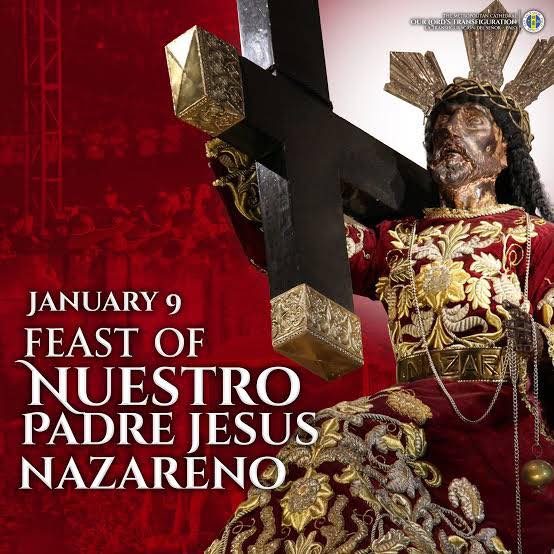
Dear friends, grace and peace to you on this joyous Feast of the Black Nazarene, our beloved Jesús Nazareno. As we gather in faith, let us reflect deeply on the living Christ whom this sacred image represents. Today, we honor Jesus of Nazareth, who bore the cross not as a sign of defeat, but as the profound expression of God’s love and companionship with suffering humanity.
The Gospel shows Jesus stumbling under the cross on the way to Calvary, amid scorn, agony, and abandonment. Yet we must ask: Did His cross-bearing cease at Calvary? No, my dear friends. Jesus continues to carry heavy crosses today, fashioned from our social sins—the collective wounds we inflict on society through indifference, injustice, and greed. These are not merely individual faults but systemic failures that diminish the God-given dignity of our brothers and sisters.
Consider the crosses of poverty and inequality. In our barrios and bustling cities, Jesus bears the weight of the unemployed, the homeless, and those struggling amid rising costs. When corruption diverts funds meant for the vulnerable—echoing recent scandals in public projects—or when inequality deepens despite economic growth, it is Jesus who falters under that burden. As Pope Francis teaches, indifference to the poor is a sin that cries to heaven, for Jesus says, “Whatever you did for one of the least of these brothers and sisters of mine, you did for me” (Matthew 25:40).
Think also of the cross of injustice and violence. In regions plagued by conflict, exploitation, discrimination against migrants, indigenous peoples, or the marginalized, Jesus is wounded anew. Social sins like racism, human trafficking, and neglect of our common home add thorns to His crown. When we ignore the cries from flooded communities or polluted environments harmed for profit, we compel Jesus to carry those consequences with the suffering earth and its people.
And the cross of division and indifference? In a hyper-connected world fractured by hatred, misinformation, and polarization, Jesus endures the loneliness of the rejected and the pain of broken unity. Our reluctance to forgive, to dialogue, or to bridge divides drives fresh nails into His hands.
Yet, in these challenging realities, this feast calls us to renewal. Our devotion must not cling solely to the revered wood of the statue, precious as it is. Rather, it is to the living Jesus, who “humbled himself by becoming obedient to death—even death on a cross” (Philippians 2:8). He came not to be served, but to serve and walk with us in our struggles. The Black Nazarene, with His dark complexion reflecting the faces of the Filipino people—the anawim, the suffering poor—reminds us of this humble solidarity. He journeys beside us, calling us to join His redemptive mission.
How shall we respond? Let this Traslación be more than a physical procession; let it be a conversion of heart. Commit to uprooting social sins: fight corruption and advocate for transparent governance, stand with the poor and marginalized, protect creation from further harm, and build bridges of peace in our divided society. In our homes, workplaces, and communities, humble ourselves as Jesus did, easing others’ burdens instead of adding to them.
As we join the procession, or simply gaze upon the Poong Nazareno, remember: It is the living Jesus we seek—the one who accompanies us always. May our lives proclaim His gospel of mercy and justice.
In the name of the Father, and of the Son, and of the Holy Spirit.